
Chimney sweeping, inspection and repair, house by house across Winter Springs.
A Seminole County city of about 39,600 people south of Lake Jesup, where the median home went up in 1989 and nearly all homes heat with electricity.
- Write to usThe form is always open
- We call you backTo settle a day together
- Based in Winter SpringsSeminole County, Florida
What we take care of, from the cap to the hearth.
 Schedule a sweep
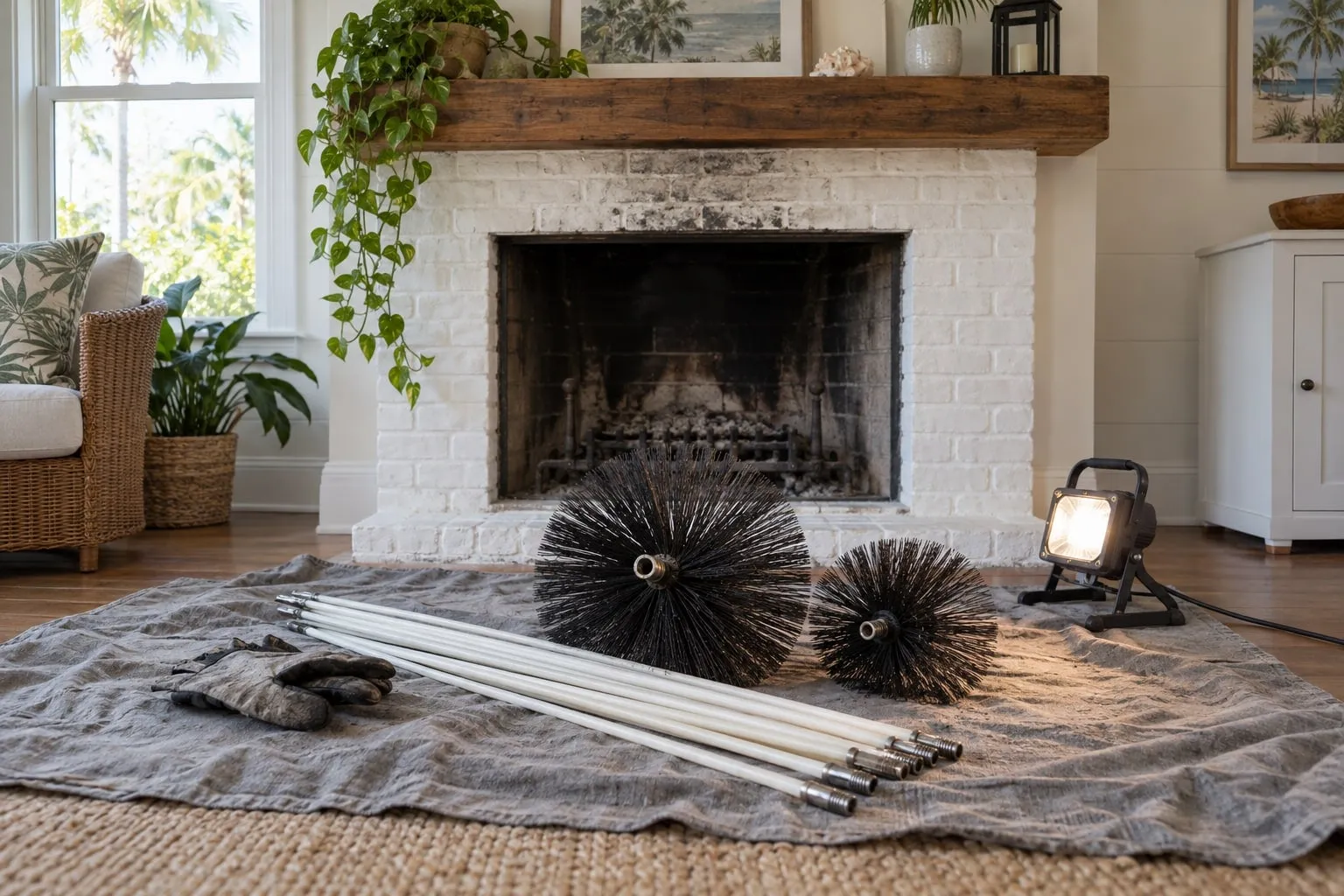
Brushes loosen soot and creosote from the flue walls, then the smoke shelf and firebox floor are cleared and the debris is hauled off with us. Even occasional fires leave some deposit.
- Brushed from damper to cap
- Smoke shelf and floor cleared
- A plain report afterwards
 Schedule an inspection
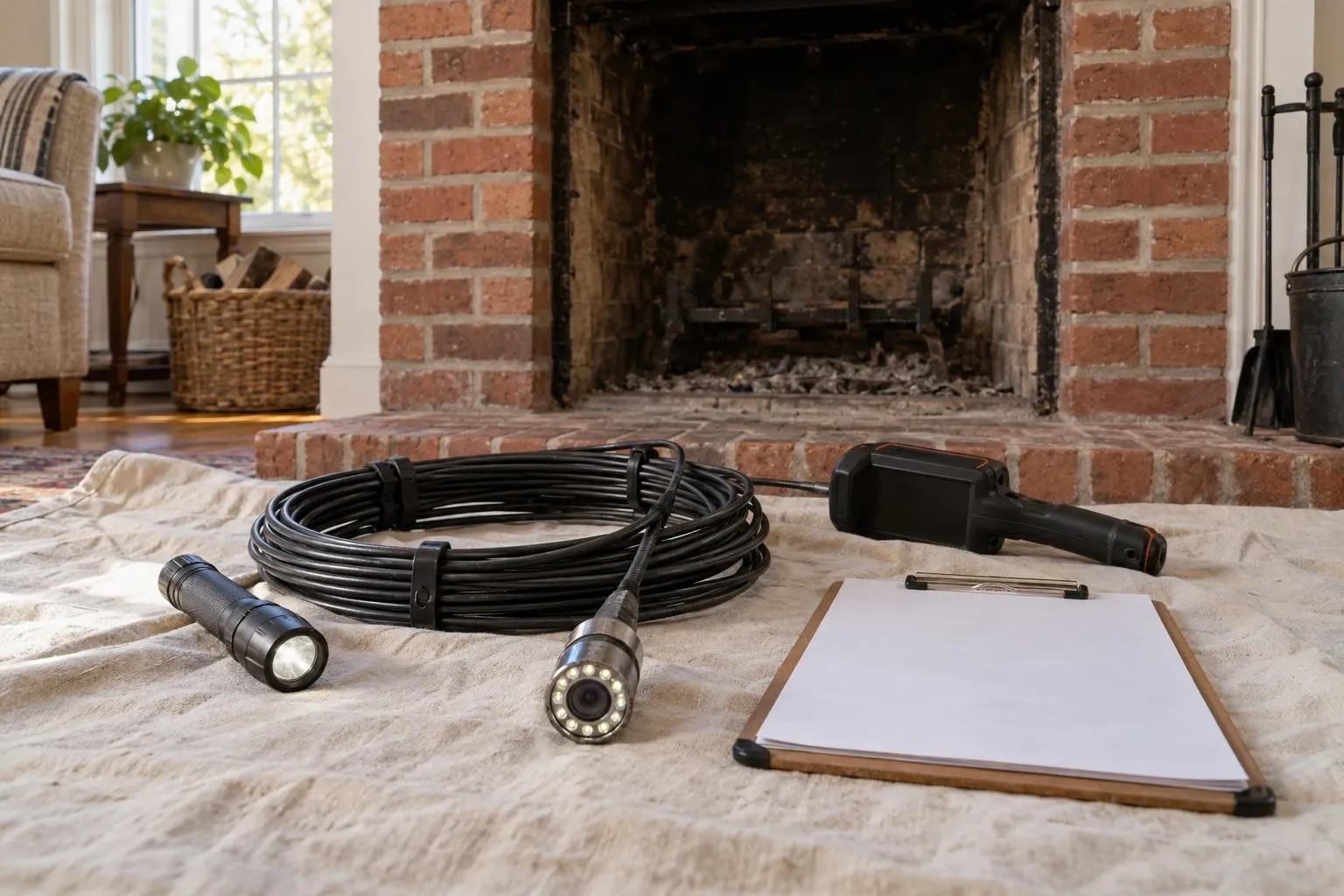
We go over all six parts, cap to firebox. Once a year is sensible, and again after a storm, a chimney fire or a sale, when NFPA 211 asks for a Level 2.
- Cap, crown and flashing
- Flue followed end to end
- Faults described in plain words
 Schedule a repair
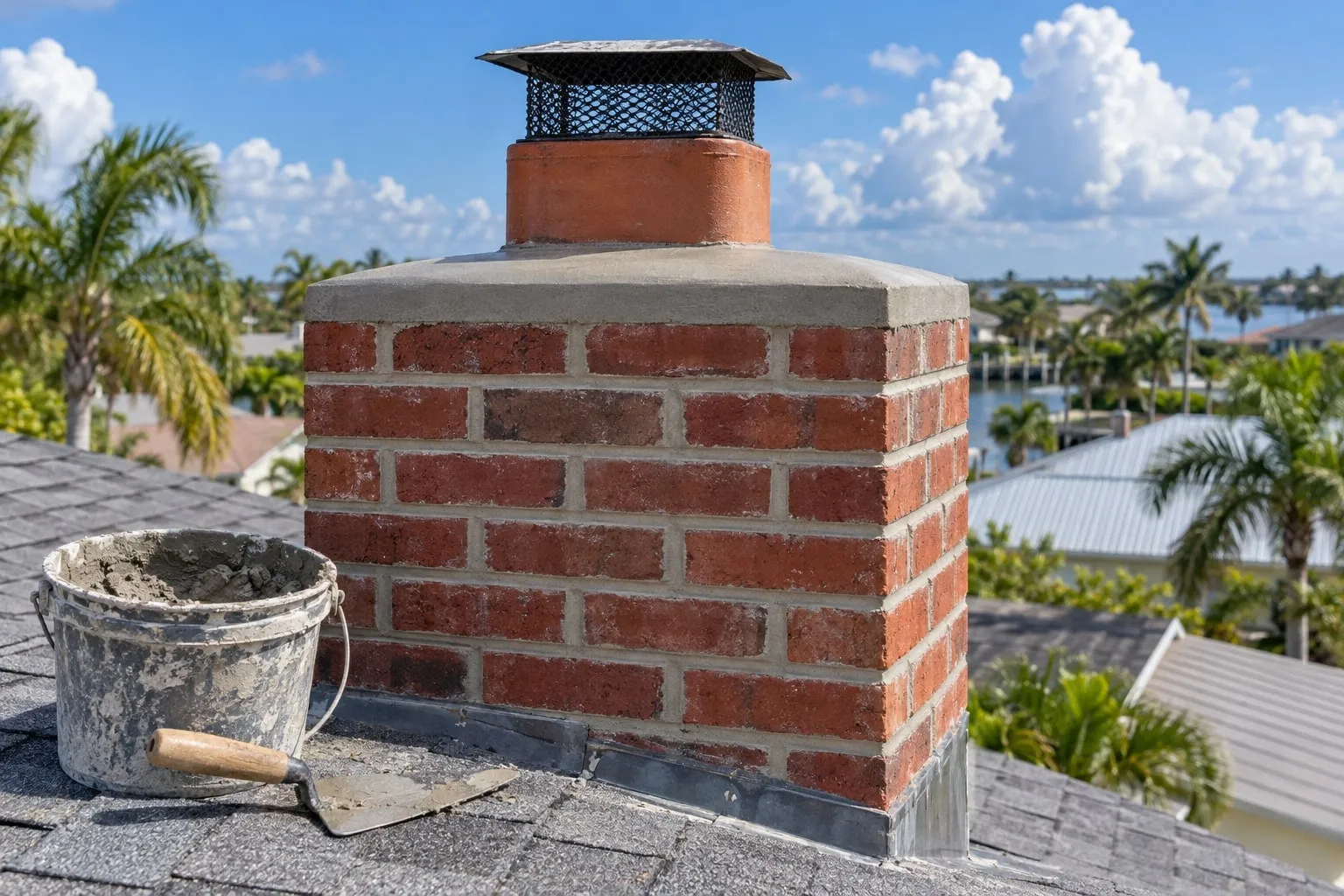
Crumbling mortar, split firebrick, a loose or dented cap, a cracked crown, worn flashing. Mending a fault while it is small costs less than after another rainy summer.
- Crowns sealed or cast anew
- Caps and mesh replaced
- Flashing resealed, joints repointed
 Schedule a cleaning
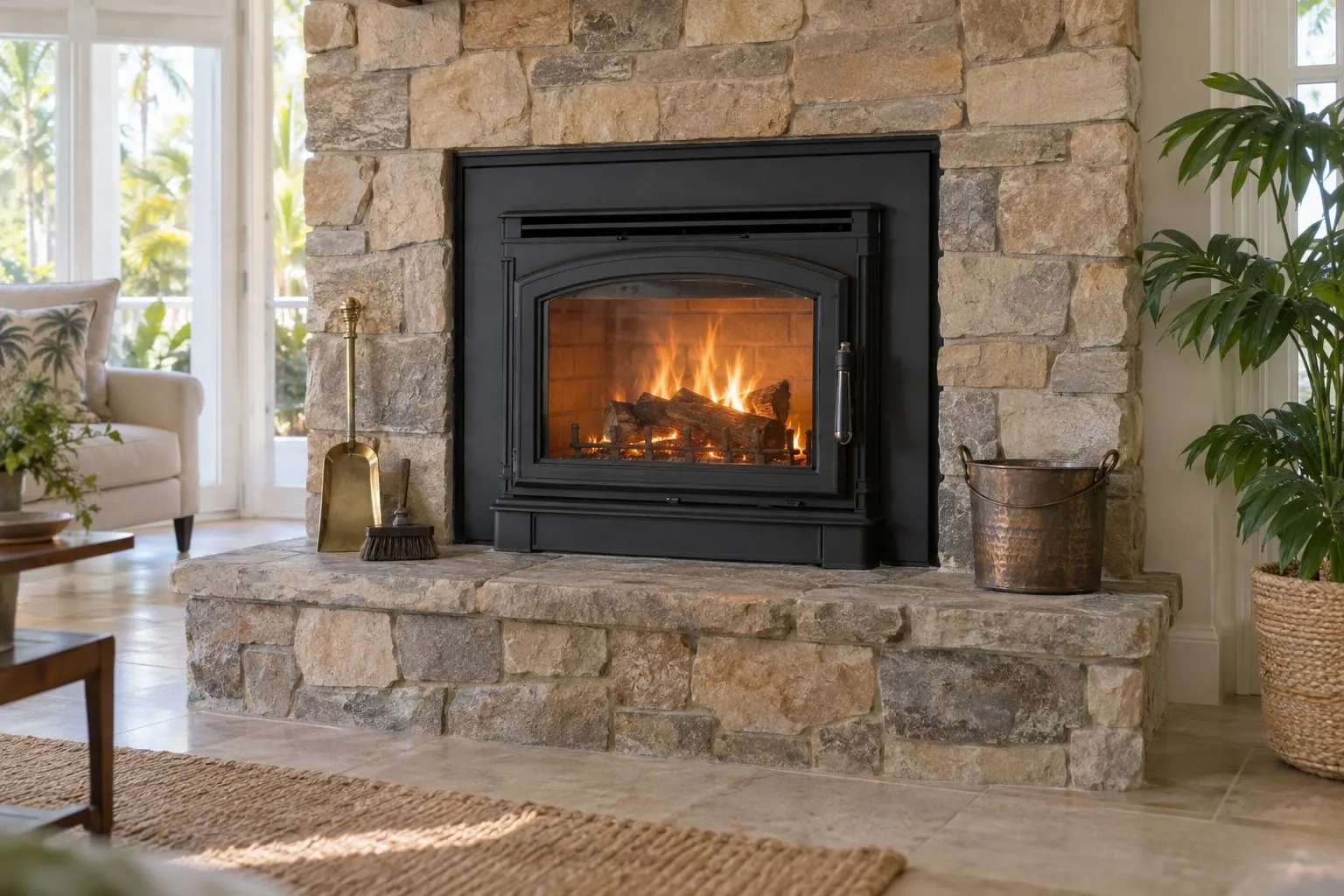
For a hearth or stove with the odd fire, as in a city where about 94 percent of homes heat with electricity. Ash and soot come out and the damper is tested.
- Ash and soot removed
- Stove, insert and pipe brushed
- Damper tried through its travel
Six parts, cap to firebox, and what a Winter Springs year asks of each.
What we check on each part, and what summer downpours, tropical storms and lightning do to it in this corner of Seminole County.
The cap, on top of the stack.
Before any other part, the cap takes summer downpours, hurricane gusts and lightning striking nearby. Its lid turns aside rain and birds, while the mesh keeps sparks from leaving the flue.
Look forstorm dents, mesh gone loose, rust on the lid or its screws.
The crown, below the lid.
Shedding water is the crown's whole purpose, and the Florida Building Code asks for a pitched top, a drip edge and caulk beside the liner. Gauges near Winter Springs caught 12.63 to 15.56 inches in Hurricane Ian, testing every hairline crack.
Look forfine cracks, chipped corners, a slab lifted from the tile, no drip edge at all.
The flashing, where roof meets brick.
Flashing is the metal collar that closes the gap between brick and roof. Rain pushed sideways by wind looks for a raised edge or dried sealant, and a brown ring on a ceiling is often the first clue.
Look forraised edges, split sealant, rust streaks, a ceiling or attic wall that has stained.
The flue liner, behind the brick.
Smoke leaves the house through the liner, which Florida's code requires inside any masonry chimney. With 1989 the median year built in Winter Springs, many flues here have worked well over thirty-five years.
Look forseams rusted through, tiles cracked or shifted, a liner unsuited to its appliance.
The smoke chamber and damper.
The first soot and creosote land on the masonry shelf just above the damper. Occasional fires fill it slowly, yet it never stays empty, and a damper that cannot seal leaves the flue open to leaves, rain and wildlife.
Look fora glazed or tarry coating, a damper that will not close fully, a shelf that flakes or tilts.
The firebox, at the hearth.
Every fire heats the firebox walls, so firebrick develops fine cracks and the mortar loosens. Closing a narrow gap is a modest job; once heat has reached the framing behind the wall, it stops being modest.
Look formortar joints that gape, firebrick that splits or sheds flakes, a hearth that rocks.
How Central Florida weather tests a Winter Springs chimney.
Rain, wind and lightning, taken from records kept in and around the city, and why a small fault is cheaper to fix before the next storm.
01 / 03
16. Rounded inches of rain at the wettest of three Winter Springs gauges in Ian
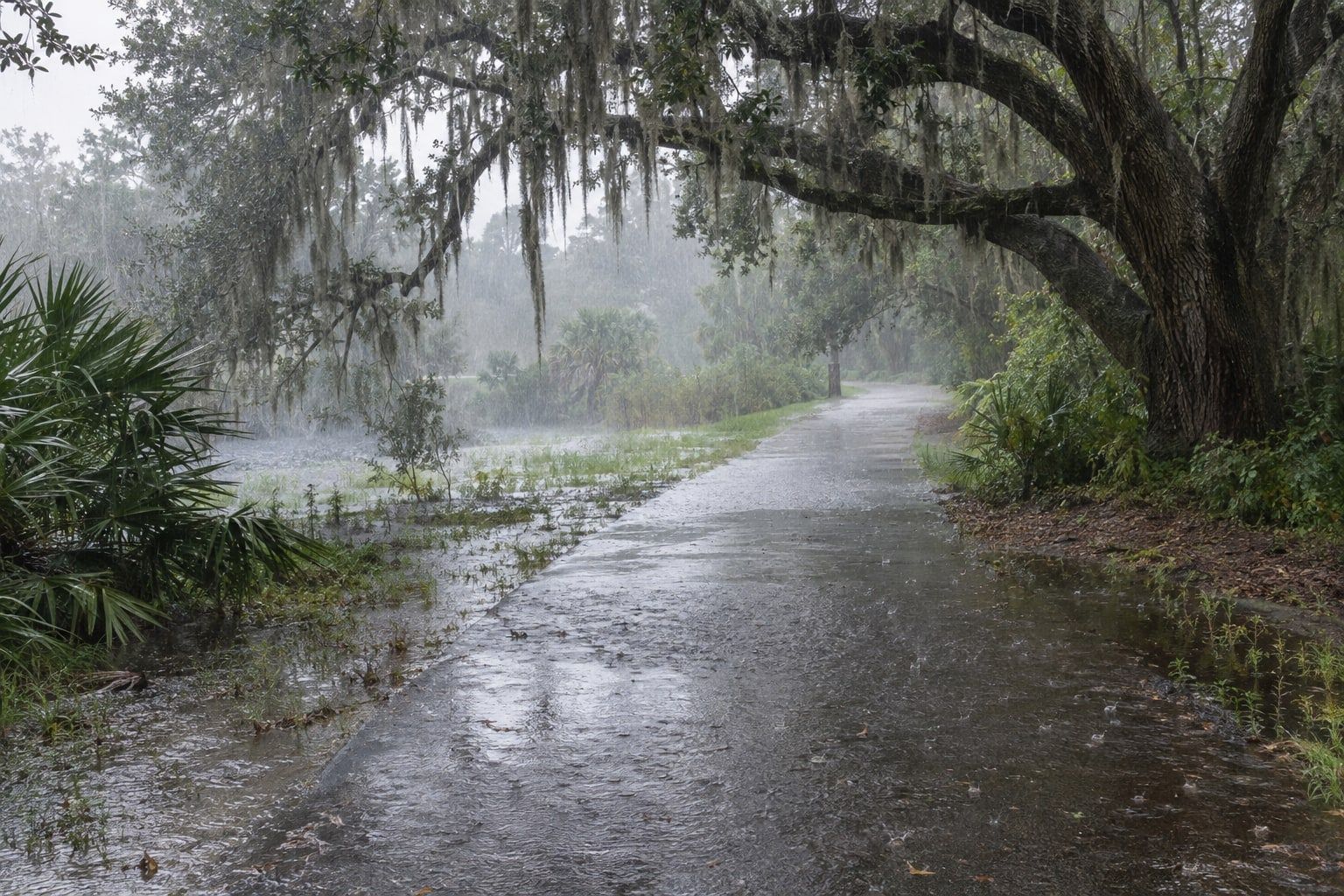
When Hurricane Ian crossed Florida in late September 2022, National Weather Service Melbourne listed three volunteer gauges in and next to Winter Springs at 12.63, 14.97 and 15.56 inches (unofficial figures). County officials reported flooded homes along Howell and Gee Creeks. A downpour of that size tests each joint of a roof, which is why a hairline crack in a crown or a lifted corner of flashing deserves attention before the wet season.
Source: NWS Melbourne, Ian rainfall totals (CoCoRaHS gauges); NOAA Storm Events Database, Seminole County flood, September 2022
02 / 03
51. Peak gust, in knots, at the Winter Springs High School station in Milton
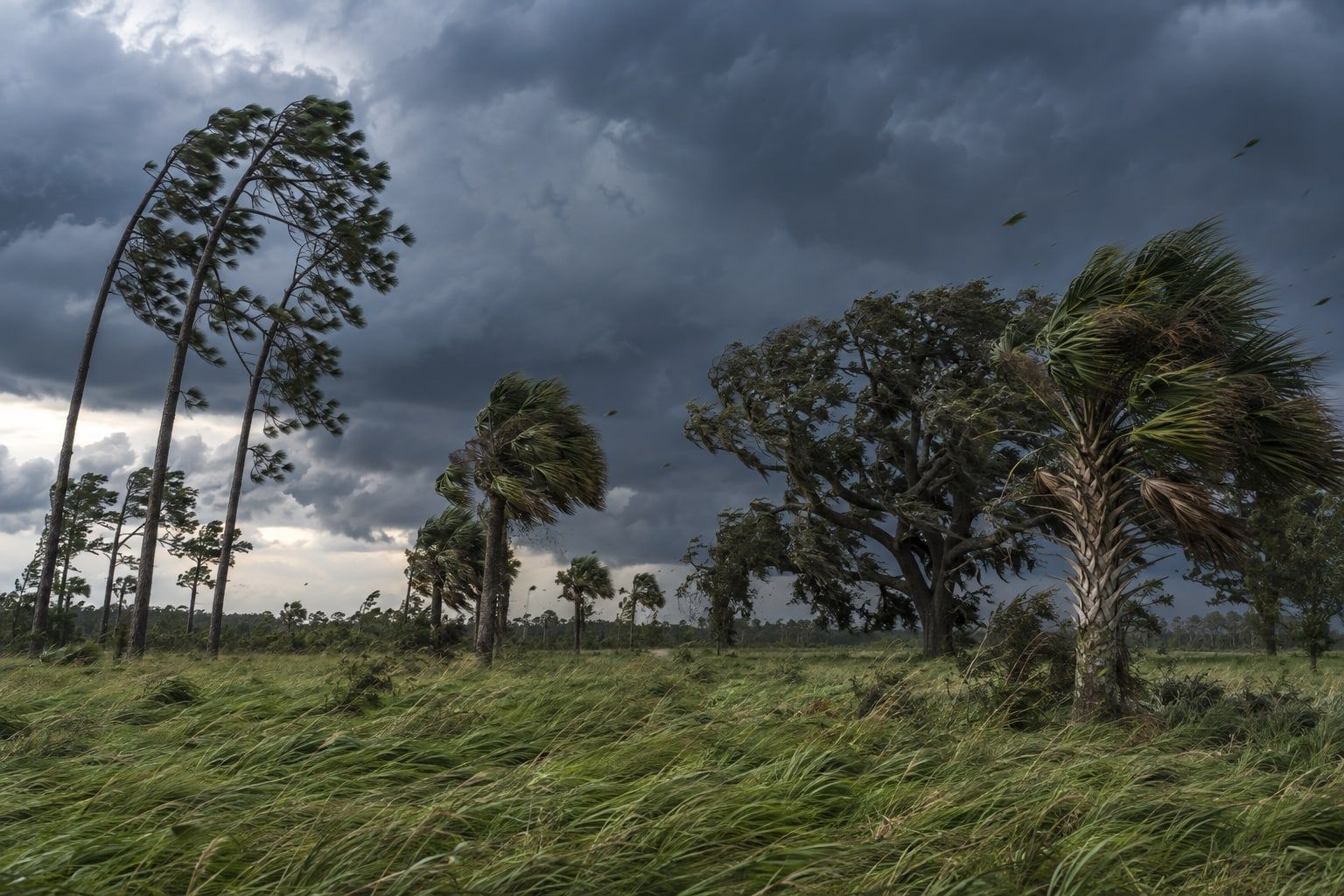
The National Hurricane Center's report on Hurricane Milton lists a sustained wind of 48 knots and a gust of 51 knots at the Winter Springs High School weather station on October 10, 2024, roughly 55 and 59 mph. The city's storm history also includes a June 2007 thunderstorm that took the roof off an older house and a March 2011 squall line that damaged twelve homes. After wind like that, inspect roof level first: a lid shifted out of place, a screen bent out of shape, flashing curled up along its high edge.
Source: NHC Tropical Cyclone Report, Hurricane Milton, table 3; NOAA Storm Events Database, Winter Springs, June 2007 and March 2011
03 / 03
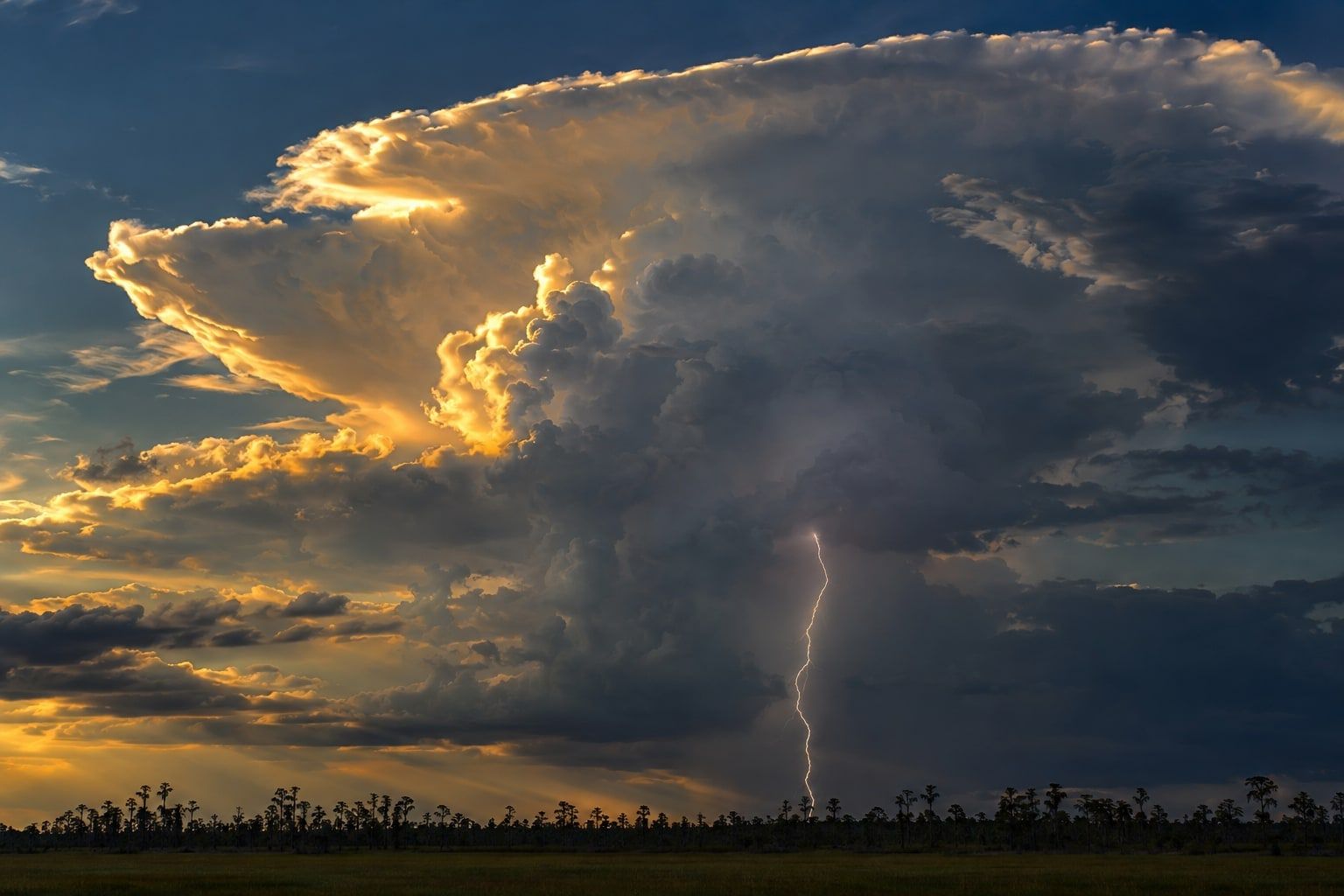
1. Winter Springs home destroyed by a lightning fire, June 24, 2007
NOAA's storm database lists a lightning fire that destroyed a Winter Springs home in June 2007. Central Florida carries the NWS Melbourne label "Lightning Capital of the United States", and that office says lightning kills more people in Florida than every other weather hazard together. Following a nearby strike, have the chimney checked, cap and screen included. The Florida code sets the free area of a spark arrestor at four times the flue outlet or more (R1003.9.2).
Source: NOAA Storm Events Database (Seminole County, June 2007); NWS Melbourne Lightning Information Center; Florida Building Code R1003.9.2
Winter Springs, from Central Winds Park to Tuscawilla.
We are based in Winter Springs, a Seminole County city south of Lake Jesup that calls itself a short drive northeast of downtown Orlando. The Census Bureau estimated 39,585 people here in July 2025, on about 14.9 square miles of land. The map below draws the city limits with eight named places inside them: on the Lake Jesup shore, the near the middle, , and on the west side, and , and the across the south.
Unsure whether your street is inside the line? Call (689) 302-8275 and we will say.
Elevation: AWS Terrain Tiles. Water bodies and city limits: US Census Bureau TIGERweb. Places and their positions: OpenStreetMap contributors.
- Winter Springs
- Central Winds Park
- Winter Springs Town Center
- Torcaso Park
- Gee Creek
- Moss Park
- Trotwood Park
- Tuscawilla Country Club
- Bear Creek Nature Trail
What Winter Springs homeowners ask.
Short answers, each with its source.
How often does a flue need sweeping?
Burning habits, not the calendar, set the pace. NFPA 211 recommends inspecting once a year, and the coat found on the flue walls then decides whether a sweep follows. Fires are the exception in Winter Springs: Census Bureau estimates for 2020 to 2024 show 13,961 of 14,893 occupied homes (about 94 percent) heating mainly with electricity, and wood as the main fuel in an estimated 23 homes, with a margin of error of 37. Occasional fires still leave a deposit, while a flue that sits idle can fill up with leaves and nests.
Source: Census Bureau, ACS 5-year 2020 to 2024, table B25040; NFPA 211
Is a chimney check worth booking before a purchase or a sale?
Yes. For a sale or transfer NFPA 211 sets Level 2, which reaches past what a person can touch: the attic, the crawl space and, by camera, the flue. Winter Springs housing is concentrated in one era, which helps and also hides things. The Census Bureau gives a median year built of 1989 and counts 11,205 of the city's 16,020 homes as built from 1970 to 1999, so many flues have decades of use behind them.
Source: Census Bureau, ACS 5-year 2020 to 2024, tables B25034 and B25035; NFPA 211
What should I check after a hurricane?
Begin with the highest parts of the stack. Cap, crown and flashing take wind and rain before anything below them. Milton sent a 51-knot gust through the Winter Springs High School weather station, and gauges in and near the city collected 12.63 to 15.56 inches in Ian. No source counts chimney damage in Florida storms, so go by what shows from the ground, or ask us to visit.
Source: NHC report on Hurricane Milton; NWS Melbourne Ian rainfall list
Can a bird or bat in the flue be handled in any month?
Not in every month. Chimney swifts are covered by the Migratory Bird Treaty Act, and a nest holding eggs or young cannot be destroyed without federal authorization, so an occupied flue has to wait. The Fish and Wildlife Service puts swift arrival in March or April and departure in August or September, and suggests cleaning outside those months. Florida also bars bat exclusions in maternity season, from mid-April to mid-August.
Source: FWS chimney swifts story and nest memo MBPM-2; Florida FWC bat notice
Is a chimney cap necessary?
For a masonry chimney, effectively yes. The Florida Building Code wants the cap pitched so water runs off, with an overhanging drip edge and caulk where it meets the liner (R1003.9.1). A spark arrestor or rain cap, where one is fitted, needs a free area of four times the flue outlet or more (R1003.9.2, R1003.9.3). Because the Fish and Wildlife Service advises against capping a chimney that swifts use, timing matters; the City of Winter Springs can tell you what it enforces.
Source: FBC Residential, 8th ed. (2023), R1003.9; Fish and Wildlife Service
My fireplace is a metal unit rather than brick. Does it need attention too?
Yes. Factory-built fireplaces have code rules of their own: the unit must be listed, labeled and tested to UL 127 (R1004.1), and its chimney listed and labeled as well (R1005.1). CSIA notes that NFPA 211 expects every chimney, gas-fired ones too, to be inspected at least once a year because a nest or other debris can block a flue.
Source: FBC Residential, R1004.1 and R1005.1; CSIA
Do you serve my part of town?
We are based in Winter Springs, in Seminole County. If your house is near the city's edge or just outside it, call (689) 302-8275 and we will let you know whether we can come.
How do I arrange a visit?
Call (689) 302-8275, or send the form below, which accepts requests day and night. Someone rings back to settle a time.
What have you noticed?
Write it down on the form, or just call. Someone returns your call and together you pick a day.
- 1Get in touch Use the phone or the short form.
- 2Hear back from us A call comes to you, and a day is chosen.
- 3Roof to hearth We check the stack in order, top to bottom.
- 4Up to you You hear what we found and decide what comes next.
Request form
Open day and night